 Skip to content

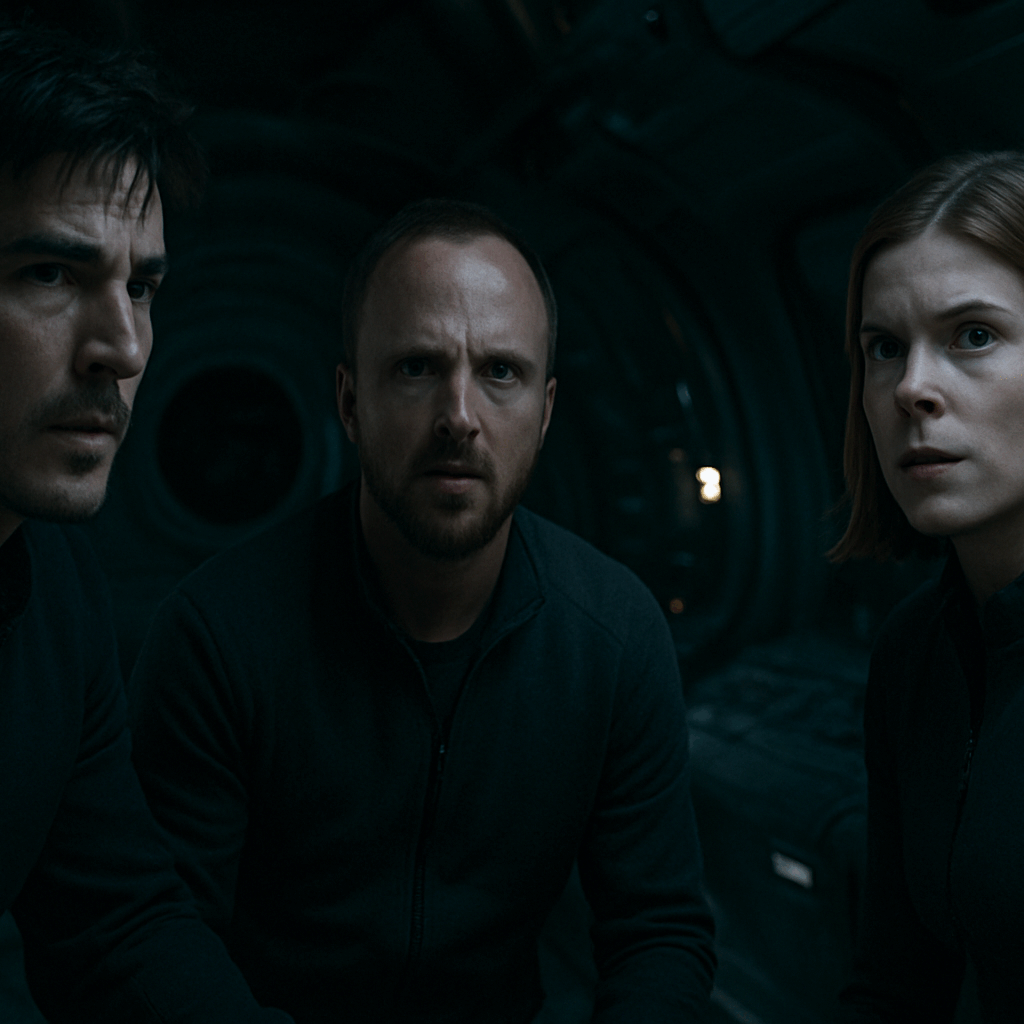
Table of Contents
Introduction
What happens when technology meets the deepest corners of human loneliness? The Beyond the Sea Black Mirror episode asks that very question, and the answers are anything but comfortable. It’s dark, slow-burning, and honestly, one of those stories that stays with you long after the credits roll.
You probably paused midway to process what you were watching. And if you didn’t, the ending surely left you staring at the screen thinking, “Wait, did that really just happen?”
Background / Story
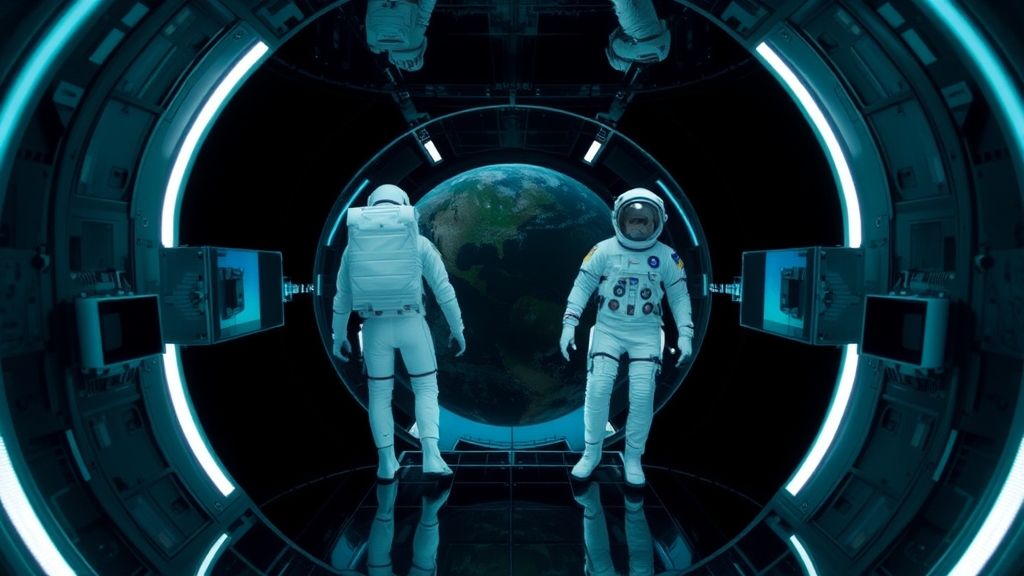
In case you have forgotten, here is an overview of the Beyond the Sea Black Mirror episode. This episode was set in an alternate 1969. The two astronauts, Cliff Stanfield and David Ros, were sent to space for a mission that will last a year. Sounds like a lonely confinement. But here is the twist: they each had lifelike copies (called “doppelgängers”) on Earth. With the help of the sophisticated tech, they can switch over to these copies’ bodies and “live” with their families, almost as if they were teleporting between space and Earth.
If you were to ask me, I would say that this is “cooking up a disaster in the kitchen of the universe.” And what a disaster it is, not far from the episode! While David is linked to his double, a cult slaughters his family in a gruesome way. Just picture it – being forced to witness the tragedy, yet completely helpless to intervene. Horrifying, isn’t it?
After that tragedy, the story unfolds around grief, jealousy, and human fragility. Cliff still has his wife and son. David has no one. And when loneliness starts eating away at David, boundaries blur, and choices spiral out of control. It’s in moments like these that the Beyond the Sea Black Mirror explained breakdown really hits: the sci-fi setup is just a stage for raw, ugly human emotions.
The Cast and Performances
One reason this episode works so well is the Beyond the Sea Black Mirror cast. Aaron Paul plays Cliff, Josh Hartnett plays David, and Kate Mara plays Cliff’s wife, Lana.
- Aaron Paul (yes, Jesse from Breaking Bad) gives us a gruff, emotionally distant astronaut who struggles to connect even with his own family. You can almost feel the tension whenever he’s in the room.
- Josh Hartnett as David is heartbreaking. He shifts from charming to broken, and finally, to chilling in a way that makes you squirm.
- Kate Mara brings subtle strength to Lana. She’s the emotional compass of the episode, caught between her husband’s coldness and David’s desperate longing.
Without this level of acting, the slow-burning pacing might have fallen flat. But the cast keeps you hooked, even when nothing “sci-fi flashy” is happening. And that’s why the Beyond the Sea Black Mirror ending feels so devastating—the characters are painfully believable.
Section 3: Themes, Options, and Hidden Layers
So let’s dig deeper. Beyond the Sea Black Mirror explained part isn’t just about “what happened” but “what does it mean?” And oh boy, there’s a lot here.
- Isolation and Grief – At its core, this is about loneliness. Both astronauts are cut off from Earth, but David suffers a grief no one should endure. Watching him unravel is painful yet very human.
- Jealousy and Resentment – Cliff resents David for his emotional connection with Lana, while David envies Cliff for still having a family. It’s a toxic cycle that builds until the final act.
- Technology as a Crutch – Black Mirror often asks: Is tech helping us or hurting us? Here, the replicas are meant to ease the astronauts’ isolation. But let’s face it—the very tool that connects them to Earth also makes the betrayal possible.
- Faith and Fanaticism – The cult that kills David’s family isn’t the main story, but it adds another layer. Technology, love, and belief systems all clash in terrifying ways.
To me, the brilliance of this episode is that it’s less about “sci-fi gadgets” and more about raw human emotion. The tech just amplifies it. That’s why the Beyond the Sea Black Mirror synopsis feels almost secondary; it’s the hidden themes that matter.
The Ending Explained
And now, the part everyone talks about: the Beyond the Sea Black Mirror ending. If you’re reading this, you probably want clarity or a place to vent your WTF reaction.
Here’s what happens: after bonding more with Lana (and maybe crossing some emotional lines), David takes a dark turn. While Cliff is away, David uses Cliff’s replica access, enters his home, and murders Lana and her son. It’s brutal. It’s shocking. And it’s the ultimate act of twisted envy.
When Cliff returns, he realizes the truth. He has nothing left. No wife, no child, no haven on Earth. Just a lifeless replica and years left in space. And the final gut-punch? Cliff has no choice but to live out the rest of the mission with David. Two broken men. Stuck in space. Together.
That ending hits harder than a typical Black Mirror twist. It’s not just about tech gone wrong. It’s about people. Human flaws. Jealousy. Rage. It makes you wonder: were the replicas really the problem, or was it just human nature showing its darkest side? That’s the brilliance of the Beyond the Sea Black Mirror explained analysis—it forces you to sit with the discomfort.
Why This Episode Feels Different
Compared to other Black Mirror episodes, Beyond the Sea Black Mirror feels slower. More like an old-school sci-fi drama than a flashy techno-horror. Some fans loved it. Others found it dragging.
But here’s why I think it works:
- It’s intimate – Instead of global chaos, it zooms in on just two men and their unraveling minds.
- It’s timeless – Even though it’s set in an alternate 1969, the themes feel modern. Loneliness, envy, and technology as a double-edged sword? Yeah, that’s still us today.
- It lingers – Not every episode leaves you haunted. But this one? It stays. You’ll find yourself replaying scenes days later, still unsettled.
To be fair, it’s not everyone’s favorite. Some argue it’s too bleak, even for Black Mirror. That may be the point. After all, the Beyond the Sea Black Mirror cast brings so much humanity to their roles that even the silences feel heavy.
How It Works (The Mechanics)
If you’re wondering about the “sci-fi logic” of the episode, here’s the simple version:
- Astronauts connect their minds to replica bodies on Earth.
- These replicas live and breathe like real humans, interacting with families.
- The astronauts split time between Earth (through replicas) and space duties.
- The whole system relies on trust. And once that trust shatters like it does between Cliff and David, the consequences are catastrophic.
See? Not too complicated. It’s more about “what humans do with the tech” than the tech itself, which is classic Black Mirror. And yes, the Beyond the Sea Black Mirror ending proves that even the most advanced tools can’t fix human flaws.
Conclusion
At the end of the day, Beyond the Sea Black Mirror isn’t just another sci-fi story—it’s a mirror (pun intended) reflecting our deepest fears about isolation, envy, and human fragility. The cast sells it. The slow pacing makes you uncomfortable in all the right ways. And the ending? Well, it’s one of those gut-punches you don’t recover from quickly.
That could be the real hidden meaning. Technology can change. Settings can change. But human flaws? They’re timeless.
So next time someone asks you about this episode, you can say: “Yeah, it’s not really about space. It’s about us.” That’s Beyond the Sea Black Mirror explained in one sentence.